The digital foundation for your AI journey.
Connect infrastructure, data and software into a foundation you can operate, observe and evolve.
Discuss your challengeExplore capabilities ↓
What does it take to put AI to work?
An AI model needs appropriately scoped data, clear user identities, dependable connections and a way to observe outcomes. A digital foundation connects these elements with existing applications and workflows, starting from business goals.
Define the approach together
One approach. Connected disciplines.
Delivery covers project-based design and integration. Architecture, platforms, operating targets and support responsibilities are agreed after discovery.
Understandable systems
Architecture, data sources and component ownership should be inspectable.
Observable workflows
Follow critical tasks from user requests through data and downstream services.
Verifiable changes
Each deployment step needs checks, acceptance ownership and a recovery plan.
Aligned with business
Connect workflows and delivery priorities with business objectives rather than a technology checklist.
Ready to adapt
Separate configuration, integration interfaces and release workflows so changes can be checked and delivered incrementally.
Scenarios & delivery approaches
EXPLORE HOW TECHNOLOGY CONNECTSConnect AI with factory workflows
From visual events to operational screens and an operator response.
Explore the approach
What would you like to connect?
Explore by topic
One foundation. Many connected capabilities.
 01
Cloud & infrastructure
Assess workloads, deployment environments, network configuration and storage.
Explore capability 02
Connectivity & APIs
Exchange data between applications, devices and existing systems within access boundaries.
Explore capability03Data & observability
Prepare data flows, dashboards and signals for incident investigation.
Explore capability 04
Identity & access
Design roles, API authorization and access configuration management.
Explore capability 05
DevOps & delivery
Standardize configuration, releases, monitoring and recovery procedures.
Explore capability 06
Edge & IoT
Connect field devices with edge processing or central systems.
Explore capabilityFrom goals to a concrete delivery plan.
Use a focused scope, explicit test conditions and agreed ownership at each stage.
- 01
Discover & define
Understand workflows, data, existing systems and goals.
- 02
Design & prototype
Describe the workflow and test a focused scope.
- 03
Validate & refine
Compare evidence with criteria before expanding.
- 04
Integrate & hand over
Complete configuration, documentation and operating procedures.
Related perspectives & insights
Explore the libraryError budgets in SRE: balancing change and reliability
Turn service quality measures into a shared decision policy for development and operations.
Read article
Edge AI or cloud: let the use case decide
Consider latency, bandwidth, retention and operations before deciding where processing runs.
Read article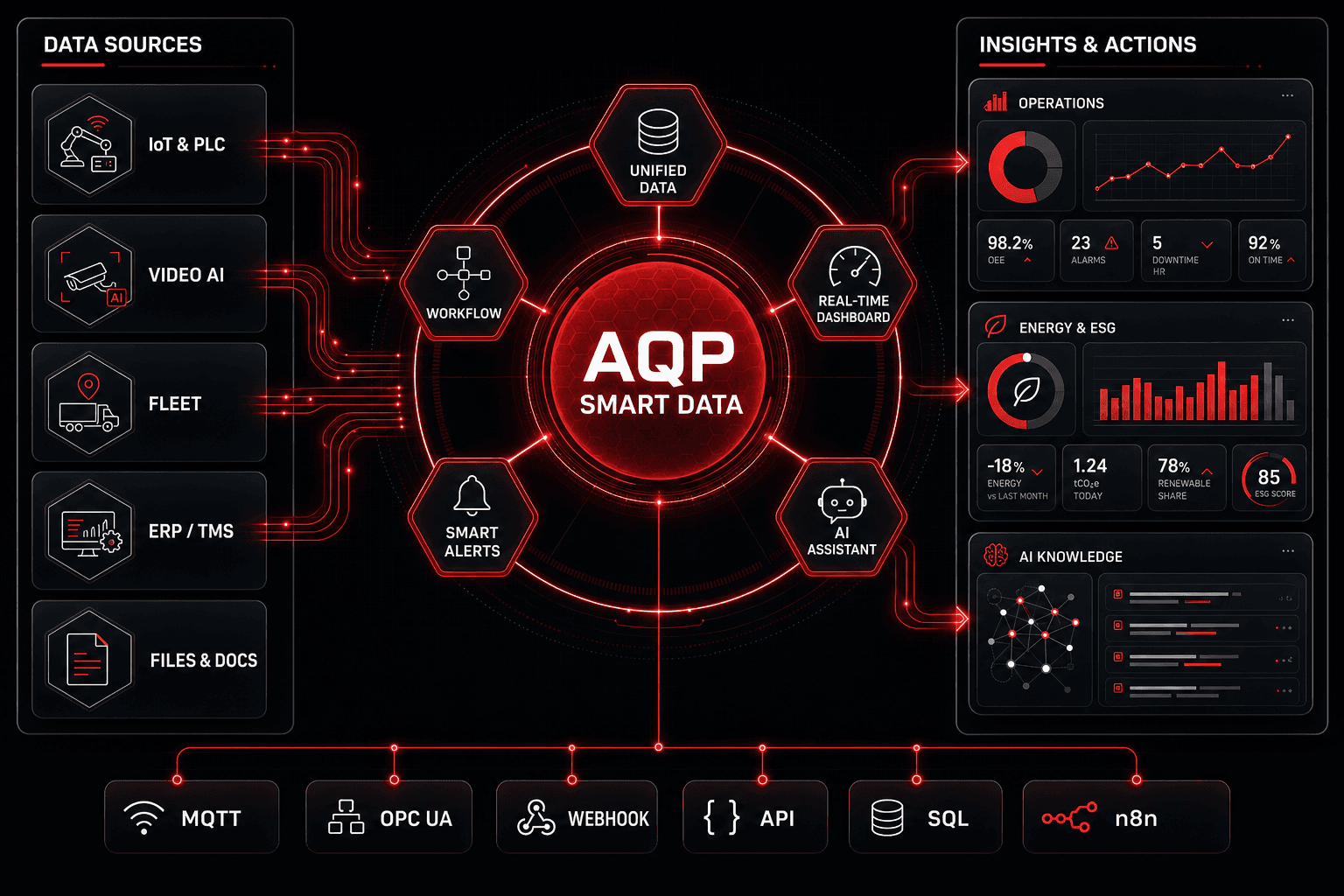
Generative AI and enterprise knowledge
Design document retrieval with references, permissions and human review.
Read articleFrequently asked questions
What does the digital foundation include?
The scope can include infrastructure, identity, networking, data integration, observability and deployment workflows. Components are selected for the use case rather than a fixed bundle.
Do we need to replace existing systems?
Discovery identifies what can remain, what needs integration and what needs change. Focused workflows can be introduced with clear migration and recovery conditions.
Can cloud and on-premises systems coexist?
A hybrid architecture can be evaluated against connectivity, data location and operating requirements. Platform choices are validated within an agreed PoC.
Where should we start with fragmented data?
Choose one user task and map the information it requires. Identify authoritative sources, ownership and synchronization before expanding.
How are acceptance criteria defined?
Agree test flows, data conditions, workload scope and operating responsibility. Numerical targets follow an assessment of the environment.
What does AQPTech hand over?
Depending on the agreement, outputs can include architecture, integration code, configuration, test results and operating guides. Access and post-handover support are agreed separately.
Start with your challenge.
Define the data, systems and the right next experiment together.
Connect with AQPTech